Welcome to

UAP-CSE

Committed to Excellence in Computer Science Education Since 1996 ✦
1500+ Students

First University in Bangladesh: Publicly Available Network Showing Detailed Calculation of Every Mark Across Your 4-Year B.Sc. in CSE Journey

Whats up?


UAP CSE Now

Everything at a glance — notices, events, seminars, workshops.

View All Posts →

Welcome aboard!

Welcome to the brand new Department of Computer …

Suspension of Classes

Urgent Notice | Suspension of Classes Until Further …

"Shab-e-Meraj"-2026

Holiday Notice: "Shab-e-Meraj"-2026.

From Classroom to Cambridge!

From Classroom to Cambridge and Back: Faria Zarin …

SnH
Jan 15, 2026

Fall 2025 Recruitment Open for …

Software & Hardware Club (CSE-UAP) Fall 2025 Recruitment. Don’t wait …

A Journey Back Home!

From UAP Undergraduate to Global Scholar and Back: …

Welcome Dr. Nazmun

Welcoming Dr. Nazmun Nahid: Advancing AI-Enabled Digital Health …

Notice
Jan 12, 2026

Orientation Program

Freshers' Orientation Program_Fall 2025

Academic Orientation Program
Notice
Jan 08, 2026

Classes for Fall 25

Commencement of Classes for Fall 2025 Semester and Revision of Registration Schedule

Academic

Welcome to UAP-CSE

Welcoming Dr. Subhra Prosun Paul to University of …

Welcome to UAP-CSE

Welcoming Dr. Md. Shafiqul Islam to the Department …

One Year Strong

Celebrating One Year of Dr. Homeyra's Inspiring Journey …

Post Details

Event Dec 11, 2025

Post Title

Quick Links

Easy Access

Quick access to important pages and resources.

How Top Researchers are Selected

The top researchers are selected based on their research scores, calculated from their publications:

  • Q1 publications: 10 points each
  • Q2 publications: 7 points each
  • Q3 publications: 5 points each
  • Q4 publications: 3 points each
  • A* publications: 8 points each
  • A publications: 6 points each
  • B publications: 4 points each
  • C publications: 2 points each
  • Not Indexed: 1 point each

For each designation (Professor, Associate Professor, Assistant Professor, Lecturer), the faculty member with the highest research score is featured. In case of a tie, the researcher with publications spanning fewer years (more concentrated research) is selected.

Most Cited Researchers

Most Cited researchers are selected based on the total number of citations they have received across their publications.

Leading Active Researchers

Leading Active researchers are selected based on their research activity in the last 2 years, including the number of publications and research score.

Top Researchers by Designation

Top researchers by designation are selected based on their highest citation count within each faculty title (Professor, Associate Professor, etc.).

Message from

Head of the Department

Inspiring Leadership
Professor

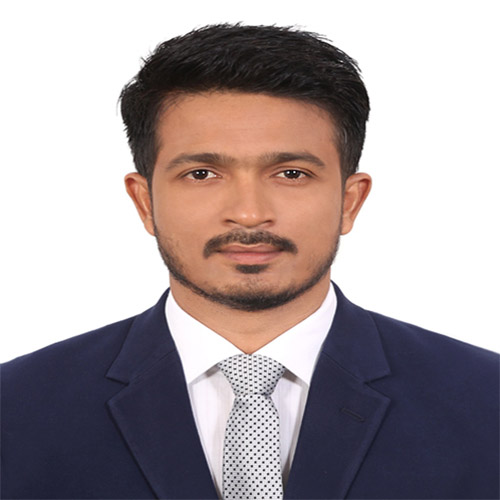
Prof. Dr. Shah Murtaza Rashid Al Masud

Professor

"

Welcome to the Department of Computer Science and Engineering (CSE)at University of Asia Pacific (UAP).

Computer Science is an exciting, challenging and dynamic discipline which is now widely recognized as an essential source of tools and techniques for advancements in nearly all spheres of human endeavor.

The Department of CSE started its journey in 1996 by …

Click to read full message

Message from

Head of the Department

Professor

Professor

Prof. Dr. Shah Murtaza Rashid Al Masud

"

Welcome to the Department of Computer Science and Engineering (CSE)at University of Asia Pacific (UAP).

Computer Science is an exciting, challenging and dynamic discipline which is now widely recognized as an essential source of tools and techniques for advancements in nearly all spheres of human endeavor.

The Department of CSE started its journey in 1996 by offering B.Sc. Engg. in CSE and later on in 2006 added offering graduate program. Currently, the Department has a total of 23 skilled full-time faculty members. Among them, 7 faculty members have Ph.D. degree from different reputed universities. The Department facilities include state-of-the-art classrooms and lab facilities. We have five outstanding computer programming labs with latest configuration computers and equipment, one dedicated lab for final year student’s project or thesis work, one digital lab, and one industry-standard gaming lab established with the support from ICT Division of Bangladesh Government.

Our CSE at UAP is a research-oriented, student-centered Department. Some of the driving principles and goals of our Department are embodied in our mission and vision statements. As a student in the Department, you will be exposed to high-quality inspirational teaching and learning. Teaching and learning are informed by industrial needs and practical industrial training is a mandatory course in undergraduate study. You will be provided with opportunities to work on real problems provided by the industry, to be taught by IT professionals and to visit business environments that develop and employ information and communication technologies.

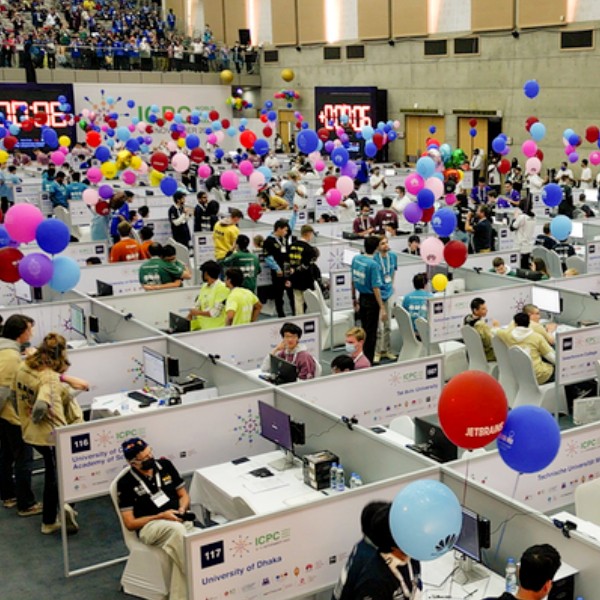
Department provides opportunities to students to enhance their experiences and to develop personally through extracurricular activities such as participating and organizing International Collegiate Programming Contest (ICPC), International Conferences, etc., that promote the building of a variety of both discipline-specific skills but also lifelong transferable skills such as enterprise, collaboration, and communication skills.

We are very proud of our graduates and their accomplishments; they are highly skilled IT professionals who pursue successful careers in a wide range of contexts in the competitive local and global market.

I invite you to visit the rest of our website to find information about our programs, our students’ achievements and activities, our research groups and research activities, and I hope that prospective students will be encouraged to join our Computer Science and Engineering Department.


Dr. Shah Murtaza Rashid Al Masud
Professor & Head
Department of Computer Science and Engineering
University of Asia Pacific


Who We Are

Vision, Mission & PEOs

A concise snapshot of what drives CSE, UAP — right below the hero.

Outcome Based Education Reserach & Innovation Sustainable Impact
Vision

Our north star distilled into three focus areas.

Global Graduates

Prepare graduates as global leaders with quality education and research excellence.

Innovation & Growth

Foster innovative ideas, extracurricular exploration, and continuous development.

Industry Collaboration

Bridge industry and academia to pioneer ICT leadership for Bangladesh and beyond.

Mission

Four missions — each a promise to our students and community.

Mission 1

Equip students with strong CS theory, engineering principles, and practical skills for diverse careers and advanced studies.

Mission 2

Enable lifelong learning and professional growth by embracing technological advancements and cutting-edge research.

Mission 3

Cultivate an entrepreneurial mindset, foster innovation, and empower individuals to build sustainable solutions.

Mission 4

Promote ethics, social responsibility, and community service, emphasizing responsible technology for society’s benefit.

PEOs

Program Educational Objectives that shape our graduates.

PEO 1

Pursue successful careers in software development, IT consulting, R&D, entrepreneurship, or advanced studies.

PEO 2

Apply deep engineering knowledge and skills to solve complex, real-world problems.

PEO 3

Engage in lifelong learning and professional development by adapting to technological advancements.

PEO 4

Contribute to society with engineering knowledge, skills, and ethical values.

Mission ↔ PEO Mapping

See how each mission underpins our PEOs.

Strong alignment Supportive alignment
Mission / PEO
PEO 1
PEO 2
PEO 3
PEO 4
Mission 1
Mission 2
Mission 3
Mission 4

Program Outcomes

You Should Know

Program Learning Outcomes (PLOs) are the most important aspect of your engineering education, aligned with the Washington Accord standards. These are high-level competencies you'll achieve upon graduation. PLOs are attained through Course Learning Outcomes (CLOs), where each CLO maps to a specific PLO. We measure your progress using Bloom's Taxonomy across all 3 domains (Cognitive K1-K6, Affective A1-A5, Psychomotor P1-P5) and measuring tools Knowledge Profiles (K1-K8), Problem Attributes (P1-P7), and Activity Attributes (A1-A5) to ensure comprehensive development in all domains throughout your 4-year journey.

The marks distribution of your 4-year BSc in CSE Program is as follows:

Bloom's Taxonomy Levels

Cognitive (K1-K6)

Level T Mk %
K1: Remember – Recall facts and basic concepts 63 1443 36.7%
K2: Understand – Explain ideas or concepts 32 339 8.6%
K3: Apply – Use information in new situations 76 1345 34.2%
K4: Analyze – Break information into parts / Compare 29 440 11.2%
K5: Evaluate – Justify decisions / Judge value 4 15 0.4%
K6: Create – Produce new or original work 6 90 2.3%

Affective (A1-A5)

Level T Mk %
A1: Receiving – Awareness / Willingness to listen 0 0 0.0%
A2: Responding – Participation / Active engagement 1 20 0.5%
A3: Valuing – Acceptance of values / Commitment 3 38 1.0%
A4: Organizing – Integrating values / Prioritizing 0 0 0.0%
A5: Characterizing – Consistent value-driven behavior 1 8 0.2%

Psychomotor (P1-P5)

Level T Mk %
P1: Imitation – Copying actions / Following demonstration 0 0 0.0%
P2: Manipulation – Performing with guidance 4 62 1.6%
P3: Precision – Accurate, independent performance 0 0 0.0%
P4: Articulation – Coordinated, combined skills 0 0 0.0%
P5: Naturalization – Automatic, mastery-level performance 0 0 0.0%

Program Learning Outcomes (PLOs)

PLO & Title T Marks %
PLO1: Engineering Knowledge 67 844 22.2%
PLO2: Problem Analysis 49 877 23.1%
PLO3: Design/Development of Solutions 49 1130 29.7%
PLO4: Investigation 5 97 2.6%
PLO5: Modern Tool Usage 19 403 10.6%
PLO6: The Engineer and Society 6 103 2.7%
PLO7: Environment and Sustainability 1 12 0.3%
PLO8: Ethics 1 5 0.1%
PLO9: Individual and Team Work 7 109 2.9%
PLO10: Communication 13 196 5.2%
PLO11: Project Management and Finance 1 20 0.5%
PLO12: Life-long Learning 1 4 0.1%

Knowledge Profiles (K)

Profile T Marks %
K1: Systematic Natural Sciences (Physics, Chemistry, Biology) 0 0 0.0%
K2: Conceptually Based Math/Stats (Analytical tools and models) 10 10 2.2%
K3: Theory-Based Engineering Fmntls (Core engineering principles) 20 347 74.6%
K4: Specialist Knowledge/Forefront (Advanced, niche discipline knowledge) 1 0 0.0%
K5: Engineering Design Support (Knowledge for creating solutions) 3 30 6.5%
K6: Engineering Practice (Technology) (Application of techniques/tools) 3 75 16.1%
K7: Role in Society & Ethics (Impacts, responsibility, safety) 1 3 0.6%
K8: Research Literature Engagement (Using published academic research) 0 0 0.0%

Problem Attributes (P)

Attribute T Marks %
P1: In-Depth Knowledge Required (Needs K1-K8 level knowledge) 14 219 75.8%
P2: Wide-Ranging/Conflicting Req. (Involves multiple disciplines/issues) 2 0 0.0%
P3: No Obvious Solution/Abstract (Requires originality and modeling) 5 50 17.3%
P4: Infrequently Encountered Issues (Problems outside routine experience) 0 0 0.0%
P5: Outside Standards/Codes (Solution goes beyond standard practices) 0 0 0.0%
P6: Diverse Stakeholder Needs (Many groups with varying, complex needs) 0 0 0.0%
P7: Many Interdependent Parts (High-level system with sub-problems) 2 20 6.9%

Activity Attributes (A)

Activity T Marks %
A1: Diverse Resource Use (Involves people, money, equipment, etc.) 7 120 100.0%
A2: Resolve Significant Conflicts (Managing wide-ranging/conflicting issues) 1 0 0.0%
A3: Creative Use of Principles (Applying novel or unconventional methods) 1 0 0.0%
A4: Significant Consequences (High risk/difficulty in prediction) 0 0 0.0%
A5: Beyond Previous Experience (Applying principles-based, non-routine approaches) 1 0 0.0%

See Us In Action

Experience CSE UAP

A quick glimpse into our campus, culture, and innovation.